
Pool wiring, bonded right and inspection-ready.
New pool going in? An older one that needs to come up to code? A job that failed inspection and left you stuck? We wire it so it's safe around water and passes the county check. We pull the permit and schedule the inspection. You don't chase any of it.

Which pool wiring job are you looking at?
Most people calling us about pool electrical are in one of four situations. Every one of them starts the same way: we come look at the pool, the panel, and the equipment. Small pool jobs are charged by the hour. If the job will take more than a day, we write it up and quote it before we start.
01 You're building a new pool, from dig to walkthrough
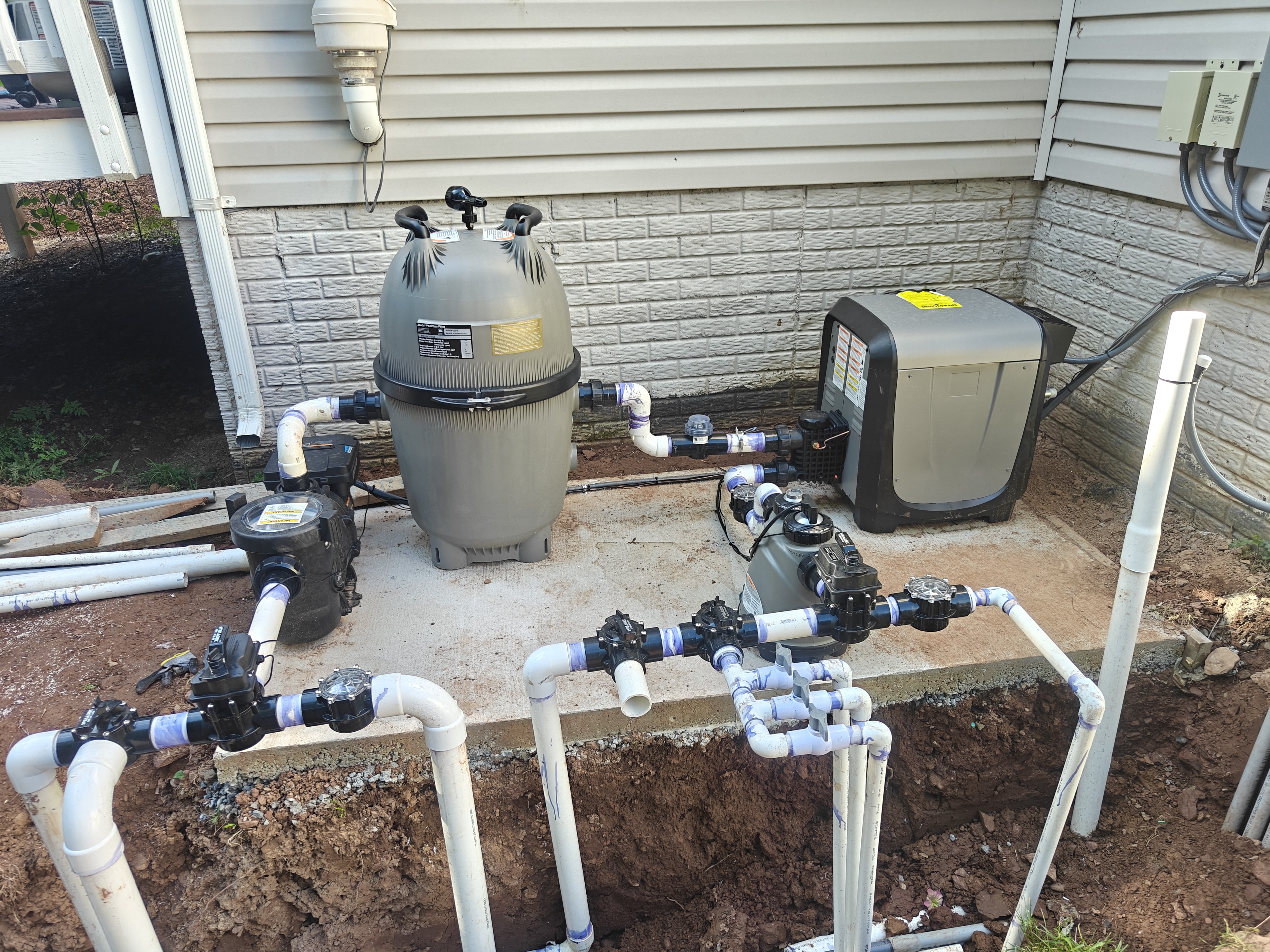
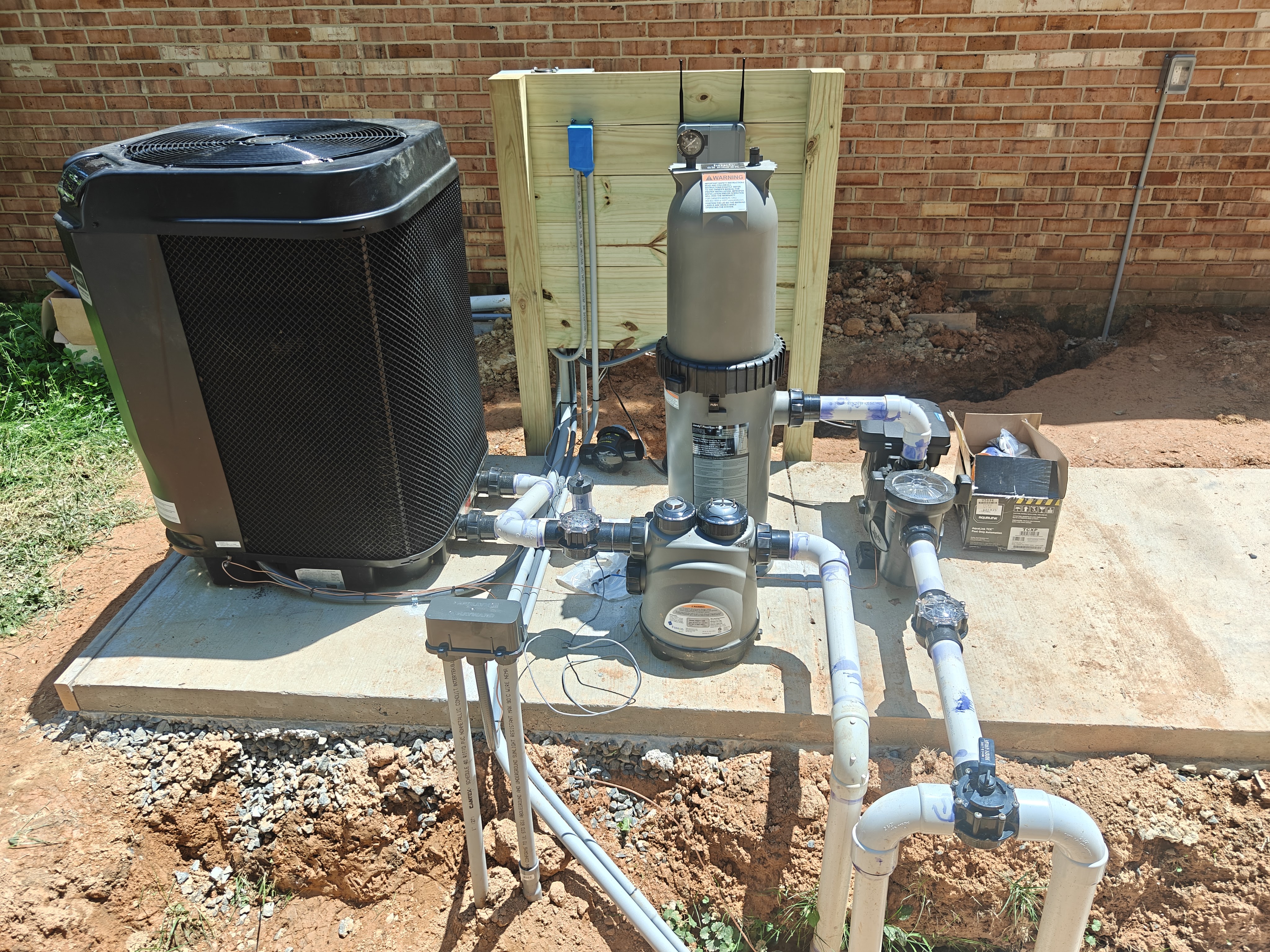
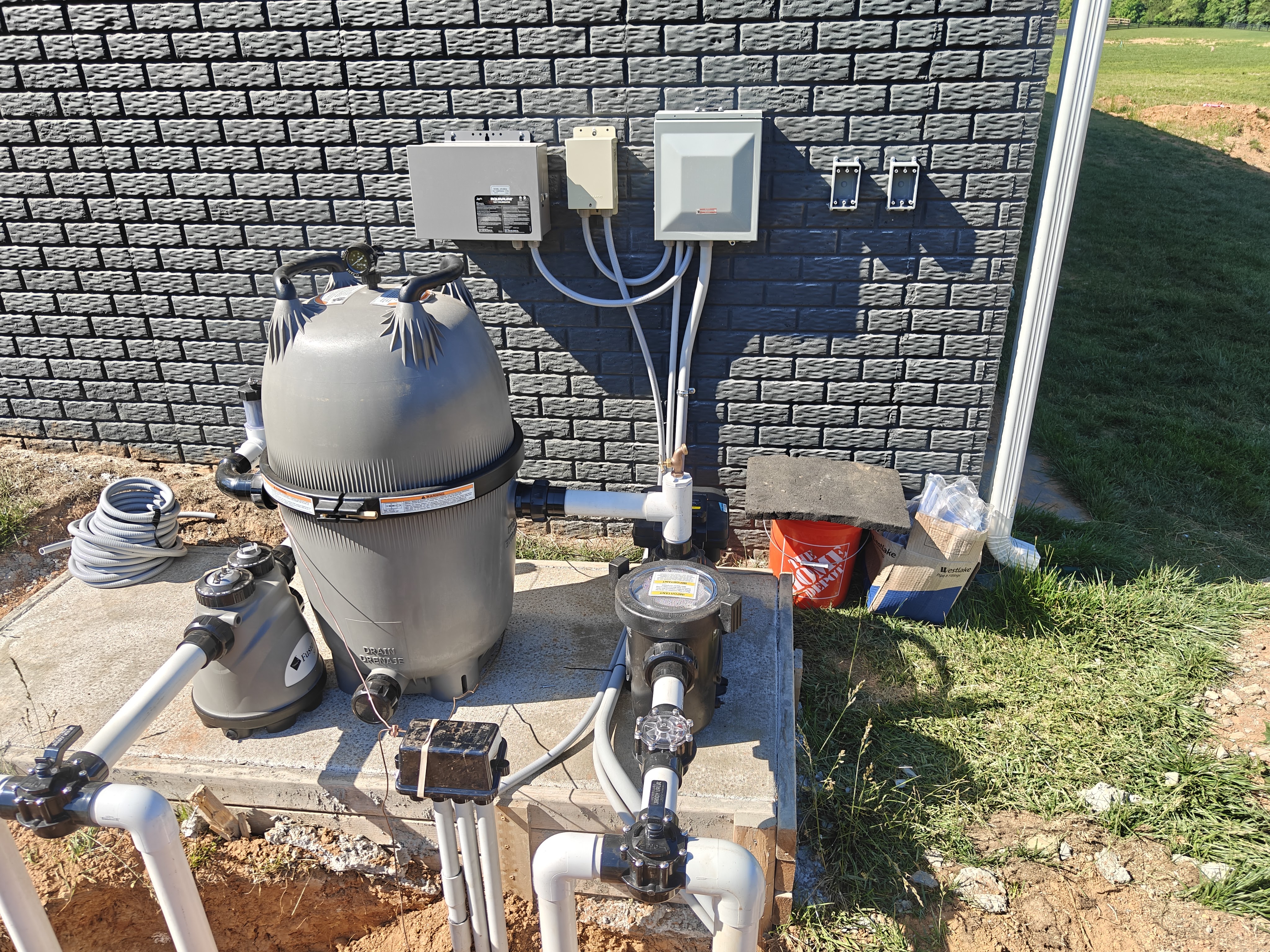
We coordinate with your pool builder from the dig date. We size the subpanel to the equipment package, run the conduit, install the equipotential bonding grid before the deck is poured (one of the most common mistakes other electricians make is bonding after the concrete sets: the grid won't bond properly through the deck), set the pump and heater disconnects, and walk you through what each breaker controls when we are done. We pull the permit in your jurisdiction, schedule the inspection, and stay on site through the walkthrough.
02 Your pool predates current code, a rewire
Pool electrical from before the 2008 NEC update almost always falls short of current bonding requirements. We assess what's there, scope the upgrade in writing, and bring everything to current code in a single mobilization. This usually includes pulling new bonding conductor to existing metal, replacing the original disconnects, upgrading GFCI to current Class A devices, and labeling the subpanel properly. If your pool was built in the 1980s or 1990s, this is the work it almost certainly needs.
03 Your pool failed inspection, a code correction
If your pool failed a county inspection or a home-sale electrical inspection, we will pull the original work, redo the bonding, re-trench if needed, replace shared disconnects with dedicated ones, and stay on the job until inspection passes. We will tell you up front what the original electrician did wrong. Most failures come from crimped bonding lugs (should be mechanical), GFCI installed at the wrong amperage, or a single disconnect serving multiple pieces of equipment. We do not blame the previous contractor. We just fix it.
04 You're adding a hot tub, a new circuit
240-volt hardwired hot tubs need a dedicated disconnect placed at least 5 feet horizontally from the spa, GFCI protection on the supply circuit, and bonding around the spa shell if it has metal components. 120-volt plug-and-play hot tubs need a dedicated GFCI receptacle from a properly-sized circuit and that's usually it. We walk you through which applies to your specific unit during the consultation, and we will tell you straight whether your existing panel has the headroom or whether you need a subpanel.
The code we work to on every pool job
NEC Article 680 is stricter than residential electrical anywhere else in your home. Most pool electrical failures come from contractors who treat 680 as a suggestion. These four sections are what we cite in every Anson pool wiring quote.
Bonding grid within 5 feet of water
All metal parts within 5 feet horizontally of the pool, including railings, ladder anchors, deck-embedded rebar, and the water-bond lug, must be connected to a common bonding grid. The bonding conductor must be #8 AWG solid copper minimum, run continuously between bonding points.
GFCI on every 15A and 20A branch circuit
Every 15-amp and 20-amp branch circuit serving pool equipment must be GFCI-protected. This includes pump motors, underwater luminaires, and any pool-deck receptacle within 20 feet of the inside wall of the pool.
Visible, dedicated, no closer than 5 feet
Each pool motor and heater must have a dedicated disconnect that is in sight of the equipment but no closer than 5 feet horizontally from the inside wall of the pool. Code allows a single shared disconnect for multiple pieces of equipment but it is not best practice.
Insulated copper, sized for the load
Branch circuits to pool equipment must be insulated copper conductors. Aluminum is not permitted for pool branch circuit wiring. Conductor sizing must account for full-load motor amperage plus continuous-duty derating.
Low-voltage transformer requirements
Underwater pool lights operating at low voltage must be supplied by an isolated transformer with a grounded shield between primary and secondary. Niche replacement requires a wet-niche assembly with a bonded shell. LED retrofits in existing wet niches must use UL-listed assemblies.
Equipment must be listed for the location
Pool equipment rooms and pool deck areas are classified as corrosive environments. All electrical equipment installed in these locations must be listed for use in corrosive locations or housed in enclosures with proper IP ratings.
What wiring your pool actually looks like
Same three steps as every Anson job, with one part that's specific to pools: the permit, built into step two. We pull it, we schedule the inspection, and we stay until it passes. You stay out of it.
-
01
Site visit
We come look at the pool, the panel, and the equipment package. For new builds, we coordinate with your pool builder's project manager. For rewires or code corrections, we tell you up front what we see and what we'd scope. No high-pressure sales. Typical: same day or next.
-
02
Written, itemized quote / we pull the permit
Every quote names the NEC sections we'll work to, lists the equipment we'll install, and prices the trenching, conduit, bonding, and subpanel as separate line items. Good for 30 days. We pull the electrical permit in your jurisdiction, whether that is Prince William County, Fairfax County, Loudoun County, or the independent city. You sign the proposal; we handle the paperwork. Typical: quote within 48 hours.
-
03
Work, inspection, walkthrough
Same in-house crew start to finish, held to the same standards on every pool. We bond before the deck is poured. We label every circuit. We walk the county inspector through the job. Once inspection passes we do a final walkthrough with you, show you what every breaker controls, and leave you with the inspection card. Typical: new builds 2-4 on-site days across the project timeline; rewires usually 1-2 days.
What pool wiring runs, and what moves the number
Pool wiring projects vary based on whether it's a new install, a rewire, or a code correction, and on whether trenching is required. We don't post fixed prices on pool work because the variables are too wide, but here's how we frame the conversation, and what shapes the number.
"A failed pool inspection is the same job, mentally, as a single GFCI on a pool deck. We pull the permit, we cite the section, we lug the bond, we pass the inspection. The pool company we sub for in Gainesville books us the same way for a one-fixture spa light replacement as for a new-build subpanel."
Why homeowners and pool builders trust us around the water
The master electrician sets the bonding standard
Brad Anson is a Virginia Master Electrician trained in the Shreve/McGonegal lineage, and he's on most pool consultations himself. Water and electricity is not the job to hand to whoever's free that week.
The crew that lugs the bond walks the inspector through
One in-house team, start to finish: the same people set the grid before the deck, land the disconnects, and stand at the equipment pad on inspection day. No sub you've never met touching a 680 job.
The exact 680 sections in writing, the permit handled
Your quote names the code sections we work to and prices the trenching, bonding, and subpanel as separate lines. We pull the county permit and schedule the inspection. You sign; we carry the paperwork.
5.0 on Google, and pool builders keep us on speed-dial
On 20+ years of master-electrician work, the pool companies we sub for in NoVA book us back job after job. We charge for what we do, don't upsell, and earn the next call.
Questions about pool wiring
How much does a new pool wiring installation cost in Northern Virginia?
Pool wiring costs vary based on subpanel size, distance from the main panel, trenching needs, and the equipment package. We don't post fixed prices because the variables are too wide. New pool electrical typically runs as a multi-thousand-dollar line item on a new pool build budget and is quoted only after an on-site visit.
What shapes the number: the subpanel amperage (60A for a basic pool, 100A+ if you have a heater and automation), how far the pool is from the main panel (more conduit and trenching for distant pools), the bonding grid extent (larger pools or complex deck shapes have more bonding work), and the equipment package (Pentair IntelliCenter automation adds low-voltage controller wiring on top of the high-voltage scope). Every quote is written, itemized, and good for 30 days.
Can I rewire an older pool to current NEC 680 code?
Yes. Pools built before the 2008 NEC update almost always need rewires to meet current bonding and GFCI requirements. We pull new bonding conductor to existing metal, replace original disconnects with current code-compliant units, upgrade GFCI to current Class A devices, and label the subpanel properly. Usually completed in one mobilization.
The most common rewire we see is a 1980s or 1990s pool where the original bonding only ran to the pump and ladder anchors, missing the modern equipotential bonding grid requirement. We add bonding conductor to deck rebar (if accessible), water-bond lug, and any metal within 5 feet of the water. If the deck is concrete and the rebar isn't accessible, we discuss whether a perimeter grid bond is sufficient. That is a judgment call that depends on the specific install and your inspector. We make that call up front, in writing, before we start.
Do I need a new subpanel for my pool?
Usually yes. Pool equipment is typically far enough from the main panel to justify a dedicated subpanel, and the subpanel makes future service calls cleaner because every pool circuit is in one place, properly labeled. Whether you need one specifically depends on your main panel's available headroom and the distance to the equipment pad.
We assess this during the site visit. If your main panel has the breakers and the equipment is within roughly 20 feet, sometimes a direct feed works fine. But for most NoVA pool installs we recommend a dedicated 60A or 100A subpanel sized to the equipment package. The subpanel goes near the equipment, in a NEMA 4X-rated enclosure rated for the corrosive environment per NEC 680.14. The slightly higher cost up front pays back when something needs service, because the next electrician can shut down just the pool without affecting the house.
How long does pool wiring take for a new pool installation?
For a typical new pool build in Northern Virginia, pool electrical takes 2-4 days of on-site work across the project timeline, usually split across two mobilizations to match the pool builder's schedule (rough-in at dig date, then trim-out at finish).
The first mobilization happens shortly after the pool is dug, before the deck is poured. We set the subpanel, run the conduit, install the bonding grid before concrete, and rough-in the disconnects. The second mobilization happens after the pool surface is finished. We land the pump and heater circuits, install lighting, set up automation if specified, label everything, and stage for inspection. Coordination with the pool builder matters more than the day-count, so we sync with whoever's running the project so we don't slow them down.
What's the difference between pool wiring and hot tub wiring?
Both fall under NEC Article 680 but follow different sub-sections. Pool wiring (680.20s) covers permanently installed pools and requires an equipotential bonding grid. Hot tub wiring (680.42) covers self-contained spas and focuses on disconnect placement, GFCI protection, and bonding around the spa shell, without the full bonding grid pool installations require.
Practical difference for most homeowners: a 120V plug-and-play spa just needs a dedicated GFCI receptacle from a properly-sized circuit. A 240V hardwired spa needs a disconnect within sight but at least 5 feet from the spa, GFCI on the supply, and bonding around the spa shell if it has metal components. Built-in spas adjacent to pools follow pool rules (full bonding grid). We walk through which applies to your specific install during the consultation. See our hot tub and spa wiring for the hot tub specifics.
Do you pull the permit, or do I?
We pull the permit. Every pool wiring job in Northern Virginia requires an electrical permit pulled by a licensed electrician, not the homeowner. We handle the paperwork in your jurisdiction (Prince William County, Fairfax County, Loudoun County, or your independent city) and schedule the inspection.
Pool work without a permit is a real problem on two fronts. First, the work doesn't get an inspection signature, which means it isn't legally signed off as code-compliant. Second, homeowner's insurance can deny claims for damage tied to unpermitted electrical work, including fire damage and liability claims for pool-area shocks. The permit fee is a few hundred dollars and we include it in the written quote. There is no scenario where we recommend skipping the permit.
Other pool & spa electrical services
Pool wiring usually touches one or more of these adjacent services. All sit under the Pool & Spa sub-hub.
Building, rewiring, or fixing a pool? Let's take a look.
Tell us about the pool and we will get back to you with next steps. We pull the permit and stay on the job until it passes inspection.